
How Do Filters Overcome the "stray light" problem in Optical Systems and Drive innovation in imaging Technology
Since the first optical lens, humanity has never stopped pursuing high-fidelity imaging. From Galileo’s telescopes unlocking cosmic mysteries to modern smartphones capturing daily moments and lithography systems patterning nanoscale semiconductor circuits—every optical breakthrough is essentially a continuous effort to overcome light propagation imperfections.
Amid this pursuit, "stray light" remains a core obstacle—innate to optical systems since their start and a key limit to imaging quality and detection accuracy.

Fortunately, optical filters have evolved from early simple colored glass to "spectral scalpels" via nanoscale thin-film interference tech, now a core tool to tackle stray light. This article analyzes stray light’s nature and sources in modern optical systems, outlines filter working principles, and focuses on their cross-field critical applications to show how they support optical industry innovation.
I. Stray Light: The "background noise" of Optical Systems
In the field of precision optics, stray light is defined as "the excess light energy that deviates from the expected optical path and reaches the detector". It is like environmental noise in an acoustic environment, which can mask weak target signals, directly lower the signal-to-noise ratio, and affect imaging and detection effects. Its sources are complex and can be roughly divided into two categories: external and internal.
1. External stray light: Interference from the environment
External stray light originates from non-target light sources in the system's operating environment. A typical case is "sky background radiation" in astronomical observations. Even under the pitch-black night sky, airglow, zodiacal light (sunlight scattered by interplanetary dust), and interstellar diffuse radiation still produce continuous weak spectral emissions, causing significant interference to the observation of extremely dark celestial bodies such as distant galaxies and exoplanets.
2. Internal stray light: A defect of the system itself
Internal stray light is generated by inherent defects in the optical system itself and can exist even in a completely dark environment. It mainly results from three types of problems:
Scattering: This includes "surface scattering" caused by microscopic unevenness on the surface of optical components, "volume scattering" resulting from uneven materials, impurities or bubbles inside light-transmitting components such as lenses, as well as "unexpected reflection scattering" from mechanical structures like the inner walls of the lens barrel and the edges of the aperture.
Ghost image: A virtual image formed when light undergoes multiple Fresnel reflections between optical surfaces and eventually reconverges near the image plane. Its position and intensity can be precisely predicted by ray tracing software.
Diffraction: When light encounters sharp edges such as apertures, it deviates from the geometric optical path and spreads towards the shadow area, creating additional background light.
II. Filters: From "Color Filters" to "Spectral Engineers"
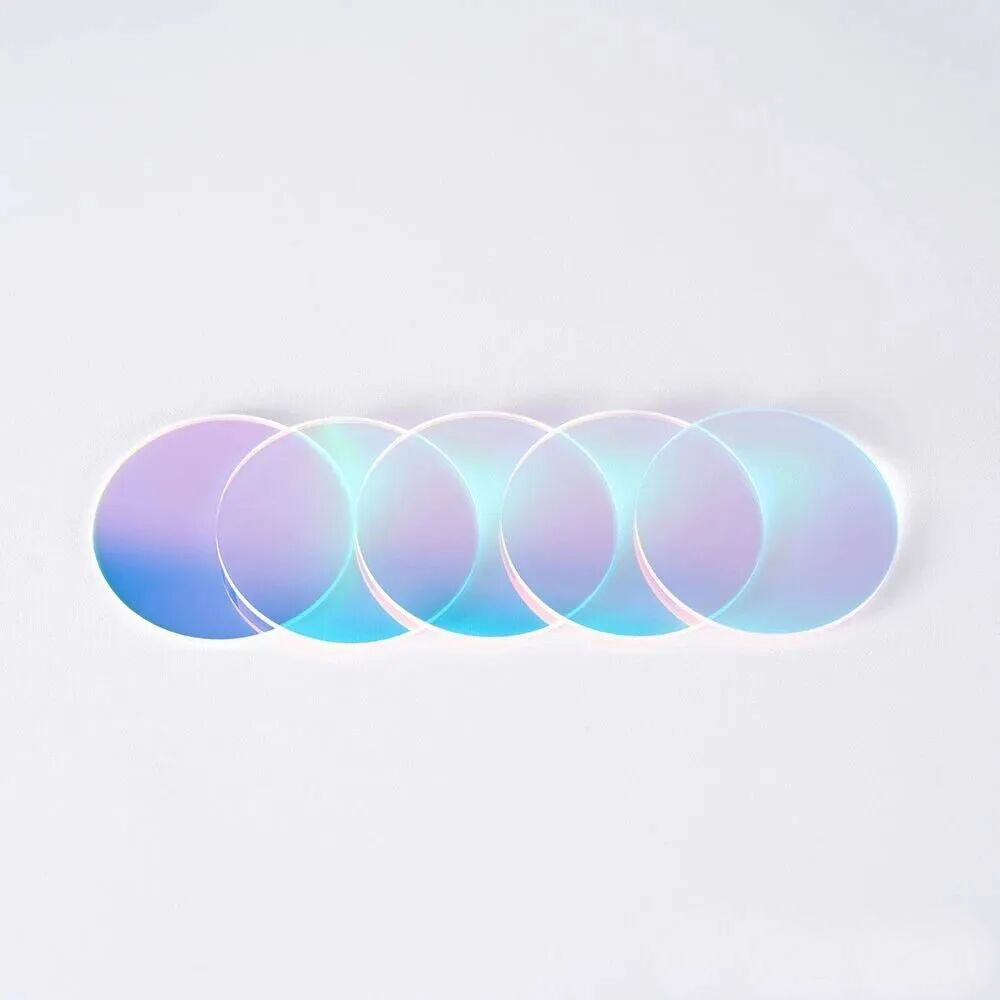
The core function of an optical filter is to selectively transmit or block light according to wavelength. With the development of technology, its implementation method has been upgraded from relying on material absorption to achieving "high-precision spectral regulation" through nanofilm interference structures, becoming the "performance regulator" of modern optical systems.
1. Absorption filter: Low-cost basic solution
Absorption filters achieve selective absorption of specific wavelengths through electronic transitions or molecular vibrations of doped materials such as glass and crystals. Its advantages are low cost and no influence from the incident Angle, but it has obvious limitations: the transition between the passband and the stopband is smooth (with a low edge steepness), and the absorbed light energy will be converted into heat, which may cause a thermal lensing effect, so it is not suitable for high-power scenarios.
This type of filter is mostly used in low-requirement filtering scenarios, such as in the field of laser safety - Schott BG series filters are often used to suppress stray light from pump lasers.
2. Interference filter: Precision filtering core
Interferometric filters are the "main force" of modern precision optics. By depositing dozens to hundreds of dielectric films with alternating high and low refractive indices on the substrate, they precisely control the spectral transmission characteristics through the reciprocal interference and reciprocal interference at the interface. Its design is derived from the multi-chamber expansion of the Fabry-Perot interferometer. When the optical thickness of the thin film is λ/4, it can achieve nearly 100% transmission at the target wavelength (λ₀), while strongly suppressing non-target wavelengths.
According to their functions, interference filters are mainly classified into three categories:
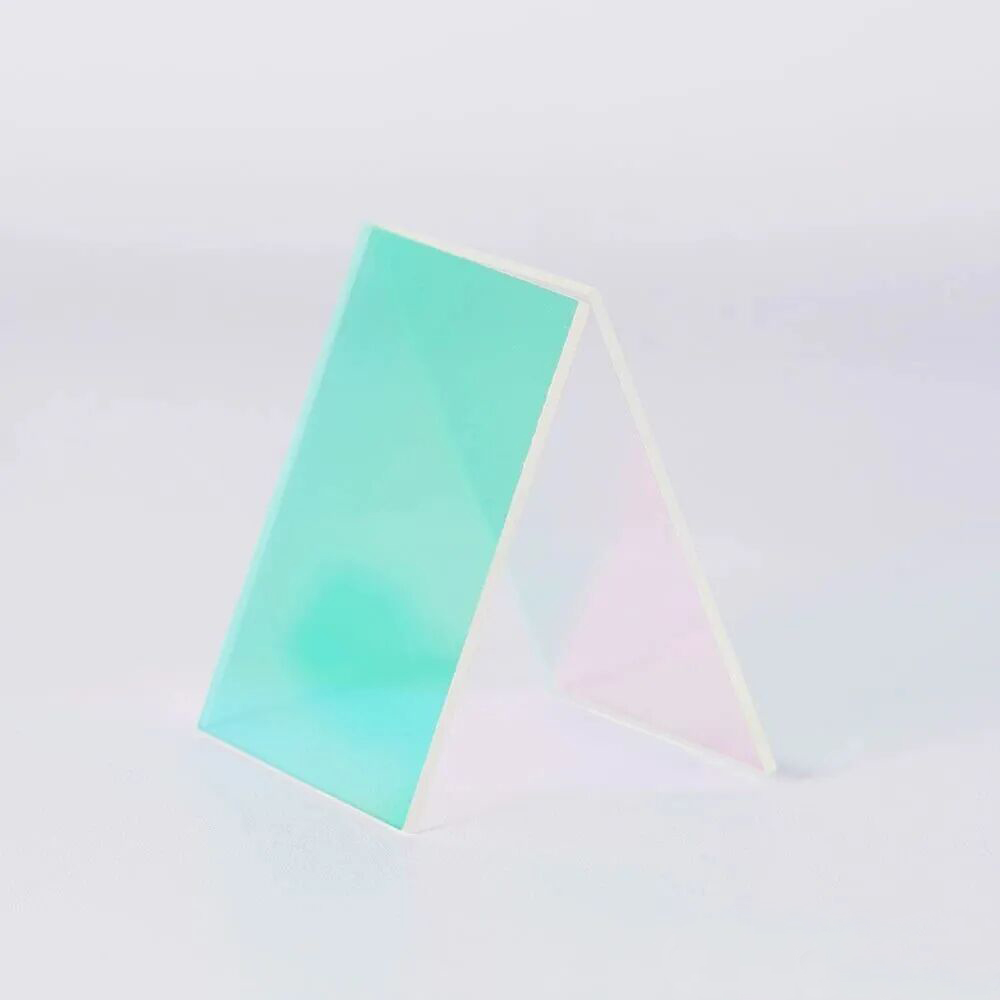
Bandpass filter: It is composed of two sets of high-reflectivity mirrors stacked around one or more resonant cavities. The more cavities there are, the better the "rectangularity" of the passband (higher edge steepness). The core parameters include the central wavelength, half-height full width (bandwidth), and out-of-band suppression ratio (commonly quantized by optical density OD), which can effectively eliminate all spectral components outside the specified band and achieve high-purity spectral selection.
Long-pass/short-pass filters: Through gradient or stepped film design, they respectively reflect short wavelengths and transmit long wavelengths (long-pass), or reflect long wavelengths and transmit short wavelengths (short-pass). For instance, the long-pass filter in a remote sensing system allows infrared signals to pass through while blocking the visible light background.
Notch filter (band-stop filter) : It is used to suppress narrow-band wavelengths. A typical application is Raman spectroscopy - it can remove Rayleigh scattered lasers with an intensity 10⁶ times higher than that of Raman signals with a high suppression ratio of OD>6, making adjacent weak Raman peaks clearly visible.
III. Cross-disciplinary Applications: How Do Filters Empower Industrial Upgrading
From consumer electronics to deep space exploration, filters have become the "invisible cornerstone" driving breakthroughs in optical technology across various fields by addressing stray light issues in different scenarios.
1. Consumer electronics: Safeguarding visual experience and color accuracy
Smartphone camera: The image sensor is sensitive to near-infrared light. If not processed, it can lead to color distortion and redshift. The solution is to integrate an "infrared cut-off filter" between the lens and the sensor, allowing only visible light to pass through and ensuring that color reproduction conforms to human eye perception.
High-end display and anti-blue light glasses: Excessive blue light from LED backlighting can cause prolonged viewing fatigue. By adding short-pass filters or selective absorption coatings to the surface of the display screen or on the lenses, high-energy short-wavelength blue light can be attenuated while maintaining overall color balance, taking into account both comfort and imaging fidelity.
2. Medical diagnosis: Enhance imaging clarity and detection sensitivity
Endoscopes and surgical microscopes: Under strong surgical light, the specular reflection on the tissue surface can mask subcutaneous details and vascular structures. Polarizing filters can only transmit light of specific polarization states, suppress surface glare, and at the same time retain diffused light carrying diagnostic information, significantly enhancing image contrast and the clarity of the surgical field of view.
Biochemical analyzer: When detecting weak fluorescence or absorption signals of biochemical reactions, it is necessary to isolate the excitation light from environmental noise. Precision bandpass filters that match the emission wavelength can selectively transmit analyte-specific signals and block other wavelengths, achieving highly sensitive quantitative detection of trace biomarkers.
3. Industrial Inspection and Security: Achieving precise identification and automation
Food sorting and quality control: The production line needs to quickly identify defective products such as moldy peanuts and foreign objects. Multispectral imaging technology, combined with narrowband filters and optical sensors, can simultaneously collect data in both visible and near-infrared bands. By leveraging the spectral reflection features that are invisible to the human eye, it enables automated real-time sorting.
Semiconductor defect detection: Nanoscale defect detection in integrated circuits has extremely high requirements for signal discrimination. By using specific wavelength illumination in combination with corresponding narrowband filters, broadband stray light can be eliminated, the contrast between defects and background patterns can be maximized, and reliable identification of sub-micron-level anomalies can be achieved.
4. Cutting-edge Technology: Breaking through the boundaries of sensing
LiDAR: During daytime operation, intense sunlight can interfere with weak echo signals. The ultra-narrowband interference filter at the receiver end can precisely match the laser wavelength, functioning like a "spectral gate", allowing only the laser echo to pass through, ensuring stable ranging in strong light environments.
Aerospace and astronomical observations: When observing distant extragalactic galaxies, the intensity of the target signal is much lower than that of the instrument and the background noise in the sky. Customized narrowband or tunable filters can target specific atomic/molecular emission lines (such as H-alpha, OIII), isolate celestial photons, extract effective data from "signal flooding", and provide support for research on cosmic evolution, star formation, etc.
Conclusion
From early refractive optics to modern photonic instruments, the suppression of stray light has always been a core issue in the evolution of optical technology. Optical filters, especially interferometric filters, have been upgraded from passive accessories to "performance enablers". By precisely regulating the wavelength of light, they can extract weak key signals in complex optical environments. Today, every breakthrough in filter technology is driving the expansion of boundaries in scientific discovery, industrial automation, medical diagnosis and consumer technology, becoming an important support for humanity's exploration of a "clearer vision".